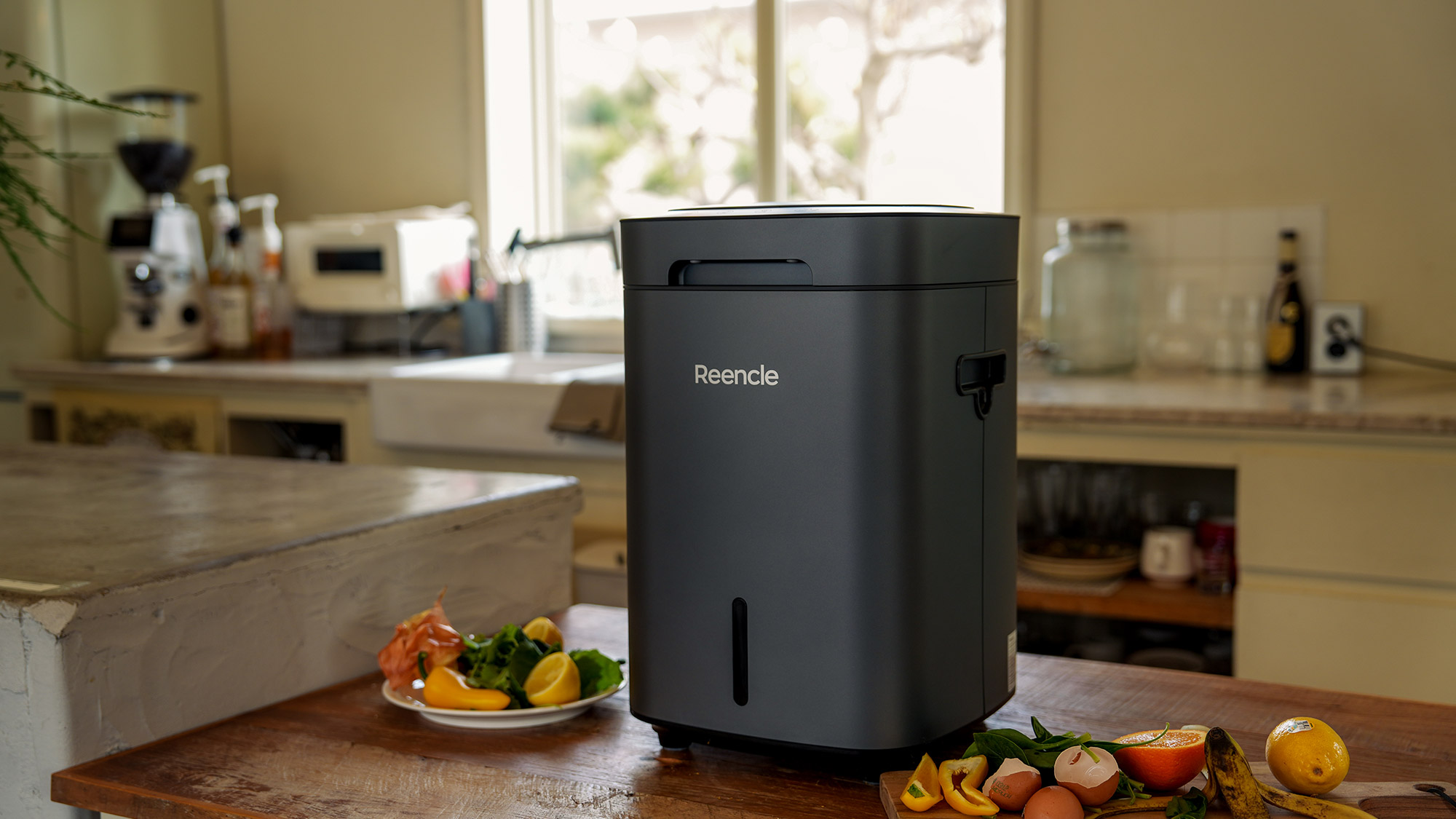
No one likes their food scraps festering in their kitchen bin. Step forward the Reencle Prime Home Composter, with our 100% honest review detailing its features – and what we really thought when testing.
Food waste: depending where you live it gets put out in a specific bin for your council to collect, emitting a rather distinctive (as in hugely unpleasant) odour as it sits there for a week. And that’s before we’ve even got to the part of bluebottles and ants getting involved. Then there’s the sloppy mess you’re left with inside after collection to deal with. Not in a council where this is in place? You probably put any leftovers or other food waste in your black binbags, which again not only leaves you with an unpleasant smell, but also there are the environmental impacts to consider. Let’s talk landfill: food buried here decomposes without oxygen, releasing methane, a greenhouse gas 28 times more potent than carbon dioxide. Rotting food also blends with other rubbish in landfills, creating a highly toxic liquid called leachate, which can leak and pollute nearby soil and waterways. And then there’s the lost nutrients to account for – burying it in landfills permanently destroys them, meaning they never return to the soil to grow new food. Got your attention? I thought so. Which is why when I was offered the chance to test the power-connected Reencle Prime Home Composter I was intrigued to find out how it worked – and how it would fit in with composting in my actual kitchen.
When it arrived, I was pleased to see its size: with a 14L capacity its dimensions are 30cm D × 33cm W × 47cm H, which meant it didn’t take up too much space between my regular bins and our wine cooler (yes, a wine cooler, which we fill far more often than we should). It’s also pleasingly aesthetic on the eye: the matte grey fits in perfectly with our appliances to the left and right (an off-white version is also available). We set it up with ease thanks to its Starter Kit: pouring it into the composter then adding 1.5L of clean water over, before waiting approximately 24 hours to commence use.
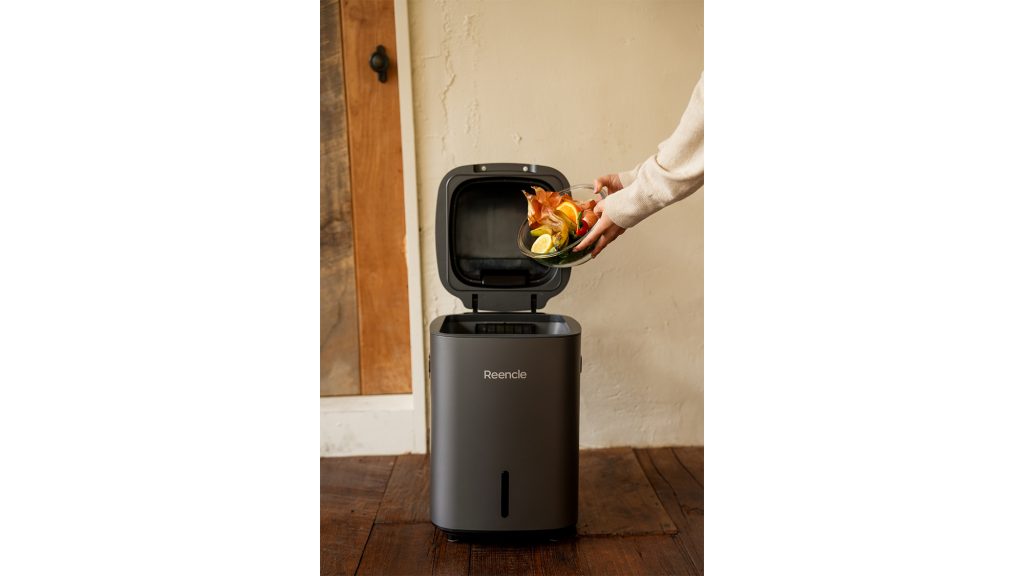
But first back to what the Reencle Prime Home Composter actually does (OK, we get the name’s a bit of a giveaway but there’s much more to it than that). Its press release describes it as ‘a game-changer for eco-conscious households, offering a true composting solution that allows food waste to be naturally recycled back into the environment, with the nutrient-rich soil compost directly used in home gardens, supporting plant growth and enriching the soil.’ It uses a unique mix of microbes to rapidly break down food waste, with 90% decomposing within 24 hours. After removing it’s then time to mix with soil and cured for around 30 days before it’s ready to return to the earth, handling a wide variety of organic materials right in your own kitchen. That’s fruits, vegetables, meat, fish, dairy products like cheese, or even cooked items such as breads, biscuits, and eggs. Nearly all organic matter can go in – with just a few to avoid, which are clearly marked in the leaflet. I for a fact already knew that you shouldn’t put large chunks of raw onion or whole bulbs inside, proudly showing off my knowledge to my husband, as I know they slow down the decomposition, because their protective outer skins are designed to resist moisture and decay.
After waiting 24 hours ‘Seymour’ was ready for his first meal (if you’ve ever watched The Little Shop of Horrors you’ll get where his name comes from). So ‘feed me’ we did, walking up to it for the sensor to open the lid automatically. In went some eggshells, vegetable peelings and leftovers, before his lid closed firmly shut. An hour later we took a peek – they’d disappeared into the Starter Kit, which meant we could add a little extra water. The next morning Seymour took his second meal of watermelon rinds and leftover toast, with the lid opening to reveal he had now broken the waste down into much finer material. After just one day the whole family had become accustomed to how to feed him. OK, so my 13-year-old and 16-year-old boys had to be told a fair few times that ‘yes, that can go in’ – but that’s not-really-listening-in-the-first-place-teenagers for you.
I also learned another lesson from reading Seymour’s press release. Many food composters on the market claim they are making true compost, whereas in fact there are two different types: dehydrating and microorganism, with Reencle the latter. The pros of the Reencle were clear to see: whereas dehydrating had a much higher electricity cost (three quarters more than the Reencle), it was also much quieter (28dB, compared with around 60dB for the dehydrator by comparison). There’s also no need to continuously clean it, while its filter (to prevent odours) only needs to be replaced every nine to 12 months – not three months such as the dehydrator.
Yes, you need a filter to prevent odours in your kitchen, and this is where I was unsure if this was just PR ‘fluff’ when in fact I’d have my boys coming in to announce ‘yuk, what’s that smell?’– their trainers aside, of course. I can confirm it wasn’t fluff: while of course there’s a slight odour when it opens up, it wasn’t what I’d deem unpleasant, while you couldn’t detect anything at all once it had shut. And I 100% mean that.
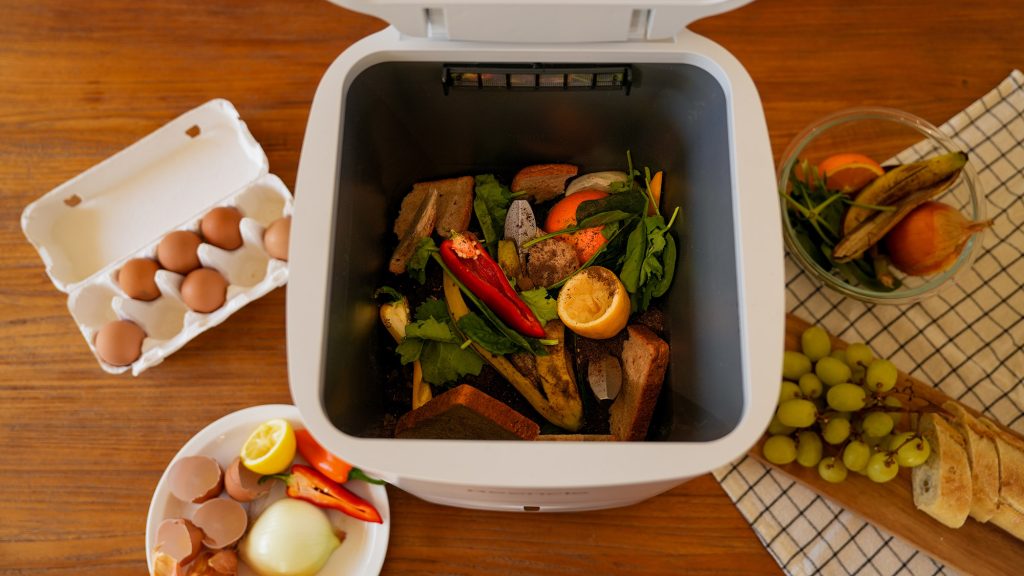
On to the first time we actually used the compost, which was when it had broken down by 90%. Because the material is highly concentrated and biologically active, you don’t apply it directly to roots, instead mixing one part with four parts of soil and let it cure in a covered, ventilated container for around four weeks. The final result was dark, crumbly, and earthy-smelling, which we then spread in our outdoor vegetable raised planter as well as on our flower beds. The result? Our tomato plants shot up and our lettuce expanded so rapidly we ate salad after salad to keep up with their growth! At the time of writing we were on a hosepipe ban, with the compost not also seeing our flowers thrive but also working as a soil shield, keeping the roots cool and reducing how often we needed to water. And that’s a limited amount with a watering can straight from our garden tap, before the Hosepipe Police come after us.
To summarise in four words: nothing short of impressive. Far less food waste heading to landfill. Our own free compost. The eager-to-see how it had broken down so quickly (that novelty is still in place). And, I repeat, you cannot smell a thing in our kitchen. Apart from our boys’ trainers. If they could be fed to Seymour we most certainly would.
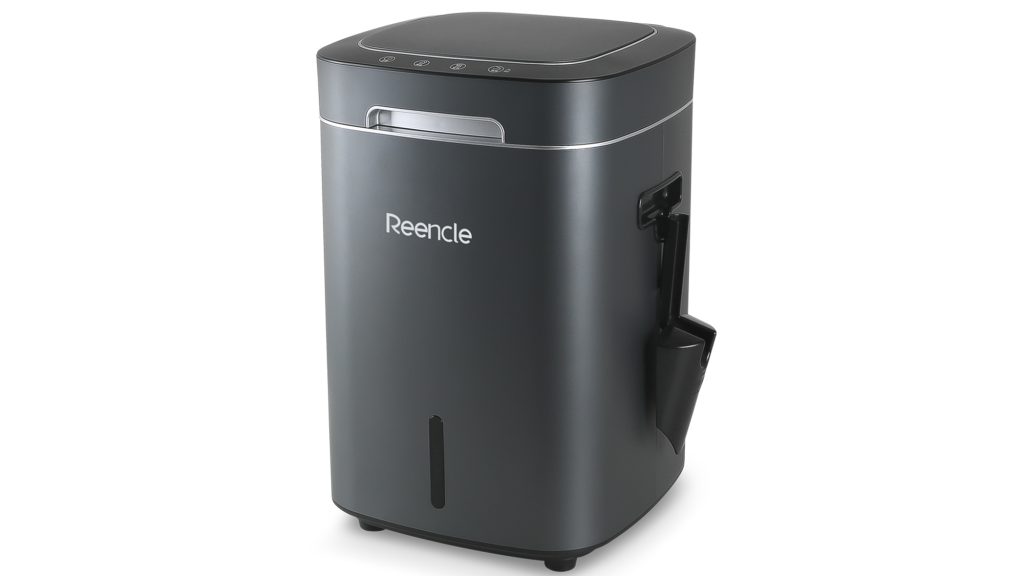
The Reencle Prime Home Composter is priced at £425 and is available to buy at www.reencle.co.uk
Disclaimer: The Reencle Prime Home Composter was independently selected and reviewed by the Best of Living Editor and has not paid for inclusion. Prices, product details and availability were correct at the time of publication but may be subject to change.